Places we'd send a friend with a free afternoon.
Rockefeller State Park Preserve
★ 4.6
🥾 Hike📍 125 Phelps Way, Pleasantville🕐 2–3 hrs💵 Free
Fifty-five miles of carriage roads that the Rockefellers actually used, completely car-free. The loop around Swan Lake takes ninety minutes and you'll see maybe four people.
Tip: Park at the main lot off Route 117—the trailhead behind Stone Barns gets muddy and has no map kiosk.
Kykuit (Rockefeller Estate)
★ 4.7
🎭 Culture📍 381 N Broadway, Sleepy Hollow🕐 2 hrs💵 $25/adult
Nelson Rockefeller's modern art collection—Picasso, Calder—installed in a Beaux-Arts mansion with Hudson views. Tours are timed entry; the terraced gardens alone justify the ticket.
Tip: Book the 10 a.m. slot online; it sells out weekends and you can't just show up.
Union Church of Pocantico Hills
★ 4.8
🎭 Culture📍 555 Bedford Rd, Sleepy Hollow🕐 30 min💵 Free
Chagall's last window commission and a Matisse rose window, both made for the Rockefellers. It's a functioning church, not a museum, so the light hits differently depending on the hour.
Tip: Open Friday through Monday only, 1–5 p.m. The Matisse is behind the altar—walk all the way up.
Old Croton Aqueduct Trail
★ 4.5
📷 Scenic📍 Trailhead at Rockwood Hall, Sleepy Hollow🕐 1–2 hrs💵 Free
A flat rail-trail along the 1842 aqueduct with river views through the trees. The Rockwood Hall section has stone arches and the ruins of a Gilded Age estate.
Tip: Go south from Rockwood toward Tarrytown—better views and fewer road crossings than the northern stretch.
📷 Scenic📍 Philipse Manor Beach Rd, Sleepy Hollow🕐 45 min💵 Free
A ribbon of public riverfront where locals bring folding chairs. You're looking west across the Tappan Zee; sunset is 6:15 in spring, 8:30 in summer.
Tip: There's street parking only and it fills by 7 p.m. on clear evenings—arrive early or walk from the Tarrytown station.
🍴 Eats📍 227 Beekman Ave, Sleepy Hollow🕐 1.5 hrs💵 $$
A converted firehouse with river-view tables and a menu built around whoever's fishing the Hudson that week. The clam chowder has bacon and the burger is dry-aged beef from a farm in Millbrook.
Tip: Request the back deck when you reserve—only six tables and they overlook the Kingsland Point pier.
🍴 Eats📍 2 Bridge St, Tarrytown🕐 2 hrs💵 $$$
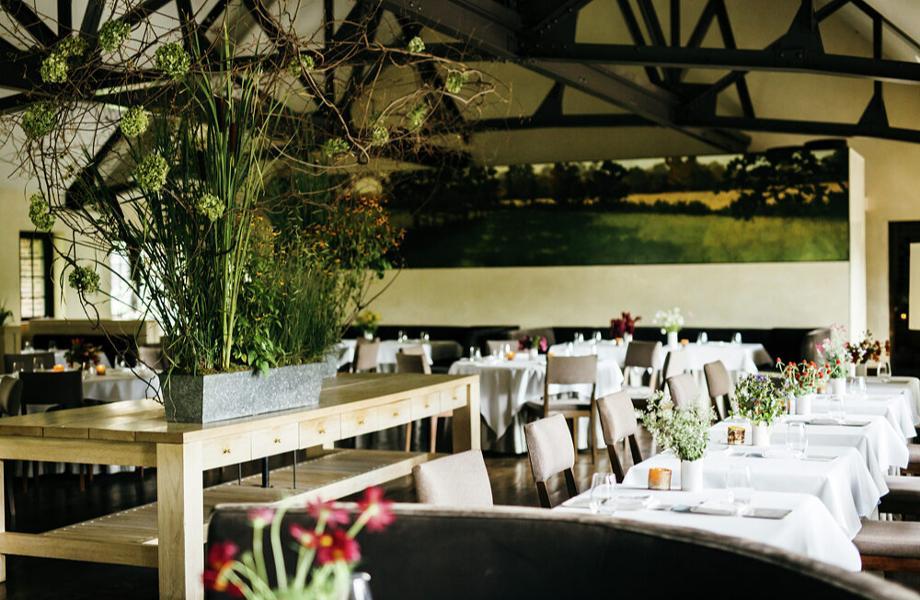
The lighter, cheaper cousin of Blue Hill. Seven courses, $95, same farm connections but more fermentation and less ceremony. The milk bread comes with cultured butter from Stone Barns.
Tip: They serve lunch Saturday and Sunday—same kitchen, half the price, done by 2 p.m.
Tarrytown Farmers Market
★ 4.4
🍴 Eats📍 Patriots Park, Tarrytown🕐 1 hr💵 $
Saturdays, May through November. The same vendors who supply Blue Hill sell direct—Hudson Valley duck eggs, Tivoli mushrooms, bread from Wild Hive in Clinton Corners.
Tip: Gets going at 8:30 a.m.; by 11 the pastries are gone and the farmers are packing up.
Sleepy Hollow Cemetery
★ 4.6
📷 Scenic📍 540 N Broadway, Sleepy Hollow🕐 1 hr💵 Free
Washington Irving, Andrew Carnegie, and the Rockefellers are buried here. It's a designed landscape—winding roads, old oaks, river views. More park than graveyard.
Tip: Enter at the main gate and follow signs to the Rockefeller plot—it's on a hilltop with a straight sightline to Kykuit.
Antoinette Boulangerie
★ 4.5
🍴 Eats📍 4 Beekman Ave, Sleepy Hollow🕐 30 min💵 $
French pastry from a chef who staged in Paris and returned to the Hudson Valley. The almond croissant has frangipane that doesn't taste like marzipan, and the baguettes are available still-warm at 8 a.m.
Tip: Cash only. There's an ATM next door at the pharmacy but it charges $3.50.
🌙 After dark📍 5 W Main St, Tarrytown🕐 1.5 hrs💵 $$
A pub with twenty taps and a backyard that stays open until midnight. Good for a post-dinner beer when you're not ready to go back to the lodge yet.
Tip: Skip the cocktails—they're pushing a craft program that doesn't match the space. Stick with the local IPAs and the pretzel.